The Weekly Anchor - April 16, 2026
Welcome to The Weekly Anchor!
Each week, we break down what’s actually happening in politics. No spin, no consultant speak…and more importantly, what we’re going to do about it.
This is not just analysis. It’s a roadmap.
This Past Week: The Trump Spiral
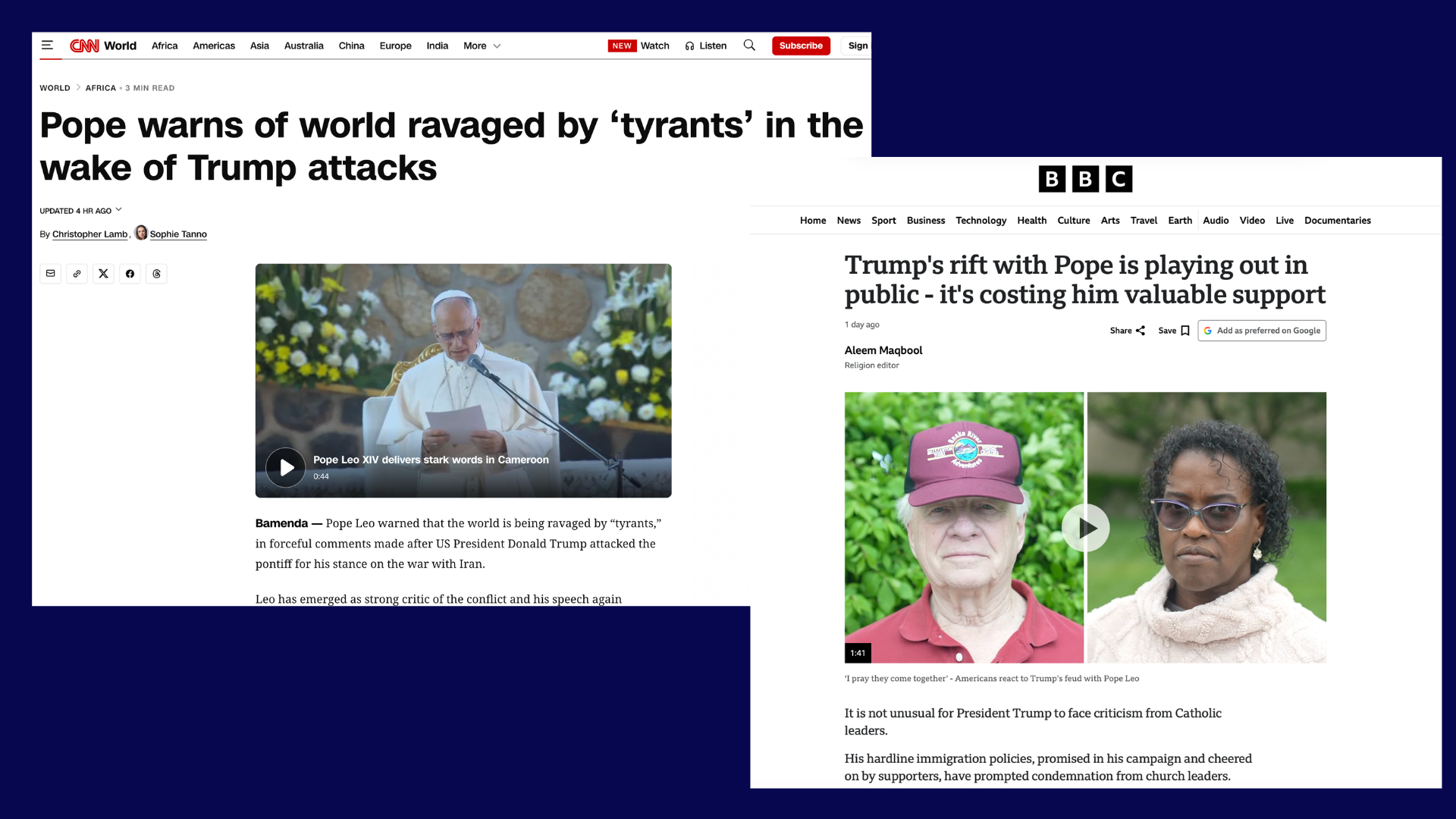
This week, Donald Trump publicly attacked the Pope, attempting to assert moral authority over one of the most widely recognized and respected religious figures in the world. The comments drew immediate backlash in the United States and internationally. Religious leaders, political figures, and global commentators responded quickly, raising concerns not just about tone, but about judgment and leadership.
What stands out is where some of that reaction is coming from. This is not limited to political opponents. There are early signs of discomfort even within parts of Trump’s traditional base, particularly among religious voters who have historically supported him. That doesn’t mean his support disappears overnight. But it does mean something is changing: voters he has relied on are starting to question him, and that’s Trump's achilles heel.
Where This Goes Next
Momentum matters, but power is decided at the ballot box. If Democrats are going to take back control, the path runs through the House. That is where this fight will be won or lost. But we cannot ignore the Senate. Without it, we will not be able to stop the worst of what is coming.
Who is actually stepping up? Who are the adults in the room? The list below is one place to look.
Featured Races This Week:
These races reflect where leadership is actually being tested across battleground districts, working-class communities, and campaigns beginning to build national momentum:
James Talarico (TX – U.S. Senate)
Talarico’s campaign has quickly become one of the most closely watched in the country, raising $27 million in the first quarter alone, the highest of any Democrat this year so far.
That level of support doesn’t happen by accident. It points to something real: a campaign that is breaking through, both in message and reach, in a state where that hasn’t happened in a long time.
Jason Crow (CO-06 – U.S. House)
Talarico’s campaign has quickly become one of the most closely watched in the country, raising $27 million in the first quarter alone, the highest of any Democrat this year so far.
That level of support doesn’t happen by accident. It points to something real: a campaign that is breaking through, both in message and reach, in a state where that hasn’t happened in a long time.
Marie Gluesenkamp Perez (WA-03 – U.S. House)
In a working-class district that doesn’t fit neatly into either party, Perez has focused on the economic pressures people are actually dealing with: cost of living, small business, and everyday affordability.
That approach stands out. It reflects a level of grounding that’s often missing, and a clearer understanding of how national decisions are showing up in people’s daily lives.
While we’re highlighting a small number of races each week, we’re also tracking additional campaigns across the country where leadership and accountability are being tested.
Sharice Davids (KS-03)
Represents one of the most competitive suburban districts in the country and has consistently shown the ability to win where Democrats often struggle. Her focus on economic issues and local impact reflects a steady, results-oriented approach to governance.
Chris Deluzio (PA-17)
A Navy veteran representing a working-class district in Western Pennsylvania, Deluzio has centered his focus on labor, economic fairness, and accountability. His approach reflects a grounded understanding of economic pressure in industrial regions.
Pat Ryan (NY-18) — The Veteran
An Army veteran representing a swing district in New York, Ryan has framed public service around accountability and defending democratic institutions. In a competitive environment, he brings a disciplined, service-first approach to leadership.
Focus of the Week: Affordability and Global Pressure
All of this sits on top of one core issue: affordability.
People are feeling it everywhere. At the grocery store, at the gas pump, and in monthly bills that aren’t going down. Right now, rising global tensions, particularly with Iran, are putting pressure on energy markets. When oil prices move, everything else follows. Transportation costs rise, supply chains tighten, and those increases get passed directly to consumers.
This isn’t abstract. It’s how global instability turns into higher prices at home. The problem is not that these challenges exist. It’s that there’s no clear strategy for dealing with them.
Instead, what we’re seeing is a pattern: short-term reactions, competing priorities, and political fights that don’t translate into real economic stability. Americans understand that the world is complicated. What they expect is leadership that can manage that complexity without making things worse.
Right now, that gap between what’s happening, and how it’s being managed, is becoming harder to ignore.
What You Can Do?
Stay up to date with our work so you can follow what matters most
Share this with someone who needs clarity, that’s how this cuts through the noise
Show up when events are announced and be part of the conversation
Support the work behind the scenes, that’s how this grows
Explore the Democracy Hub for tools, resources, and ways to stay involved.
Fun Fact of the Week
Trump threatened to fire Federal Reserve Chair Jerome Powell on Wednesday, a move that would place his presidency at risk. On top of a war with Iran nobody wanted, & continued outrage over the Epstein scandal. That’s pressure on every front. And it’s starting to show.
This week made one thing clear: the pressure is building, but leadership still isn’t meeting it. What happens next will be decided by who steps up…and who doesn’t. We’re not waiting to find out. We’re building what comes next.
Until next week,
The Blue Anchor Project Team